An AI-native ad format that turns branded content into head-to-head games people actually want to play.
Display advertising had run into a wall of banner blindness. On feeds like Twitter, static ad units get scrolled past before they register, and the usual response, bigger, louder, more intrusive, only deepens the fatigue. The brief was to design something categorically different: Versus AI, a social ad format that trades passive impressions for active play. Instead of watching an ad, users tap into a quick, competitive, head-to-head game built from the partner's own content. The core design problem was making that game feel native to the feed, instantly understandable, and worth a tap in the half-second before a thumb keeps moving.
The harder constraint was scale without sameness. The format is powered by proprietary AI that transforms existing partner content into the Versus experience and drops it into each partner's content ecosystem, meaning the interface could not be a hand-crafted one-off. It had to be a system: a flexible brand and UI framework that stays recognizably 'Versus' while absorbing wildly different source material across partners like Twitter and Microsoft. Every screen had to hold up as a template an AI could populate, not a static comp that only works once.
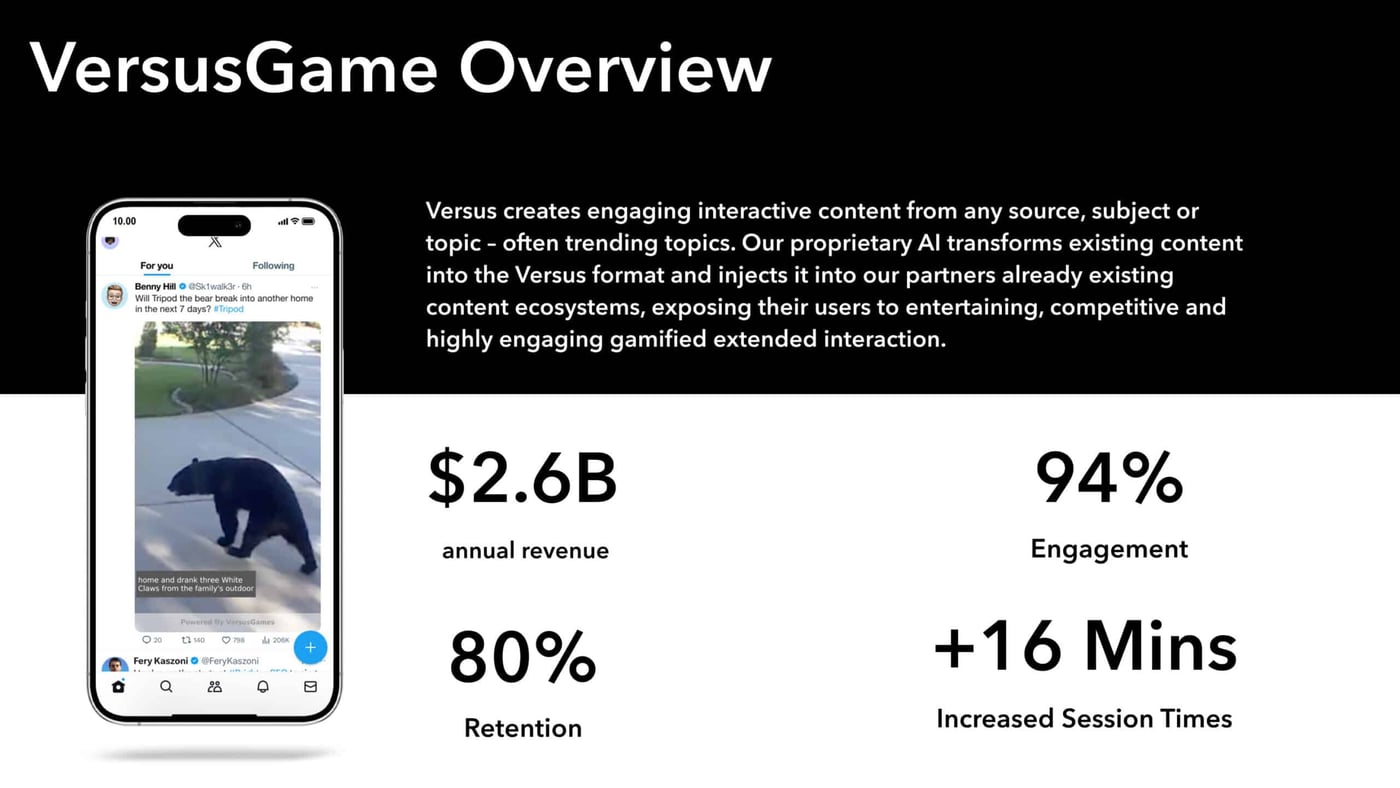
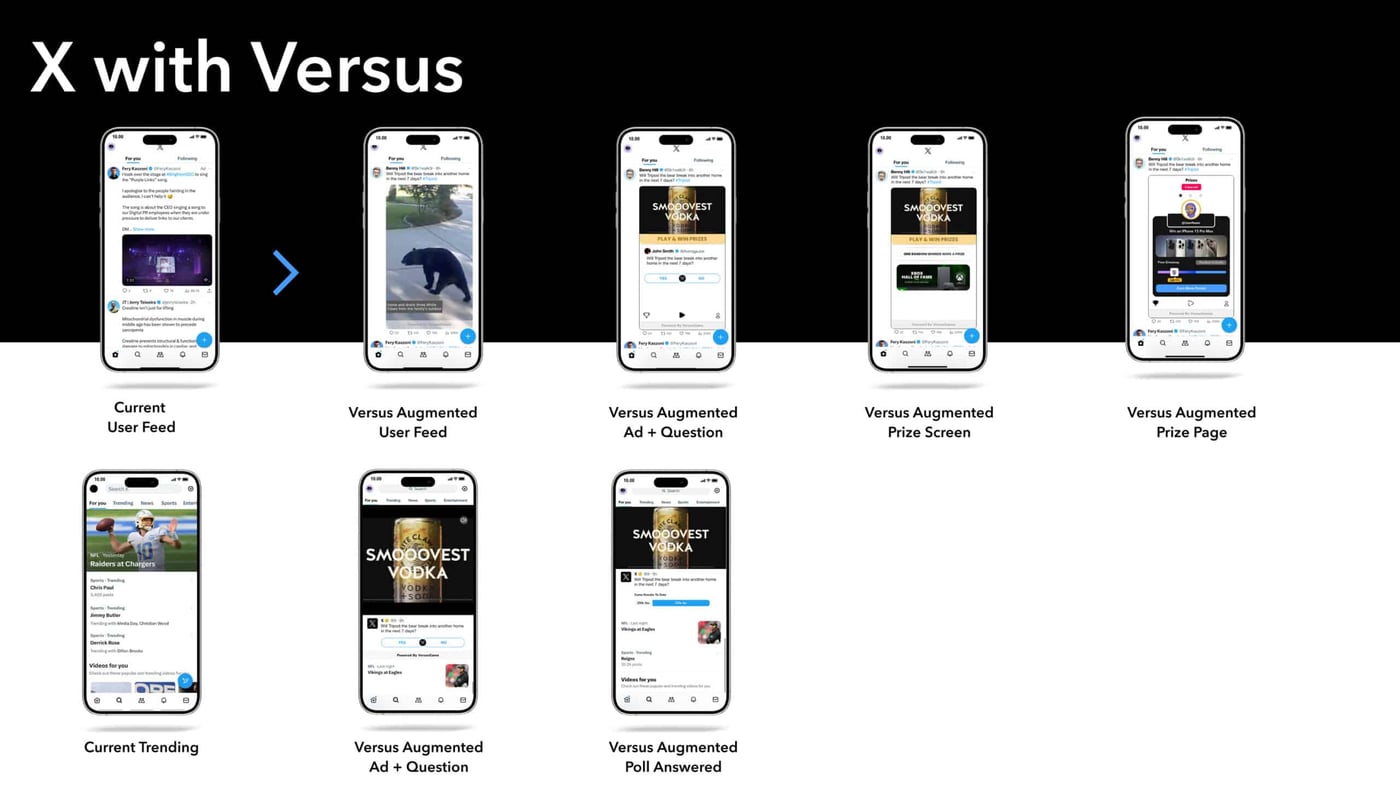
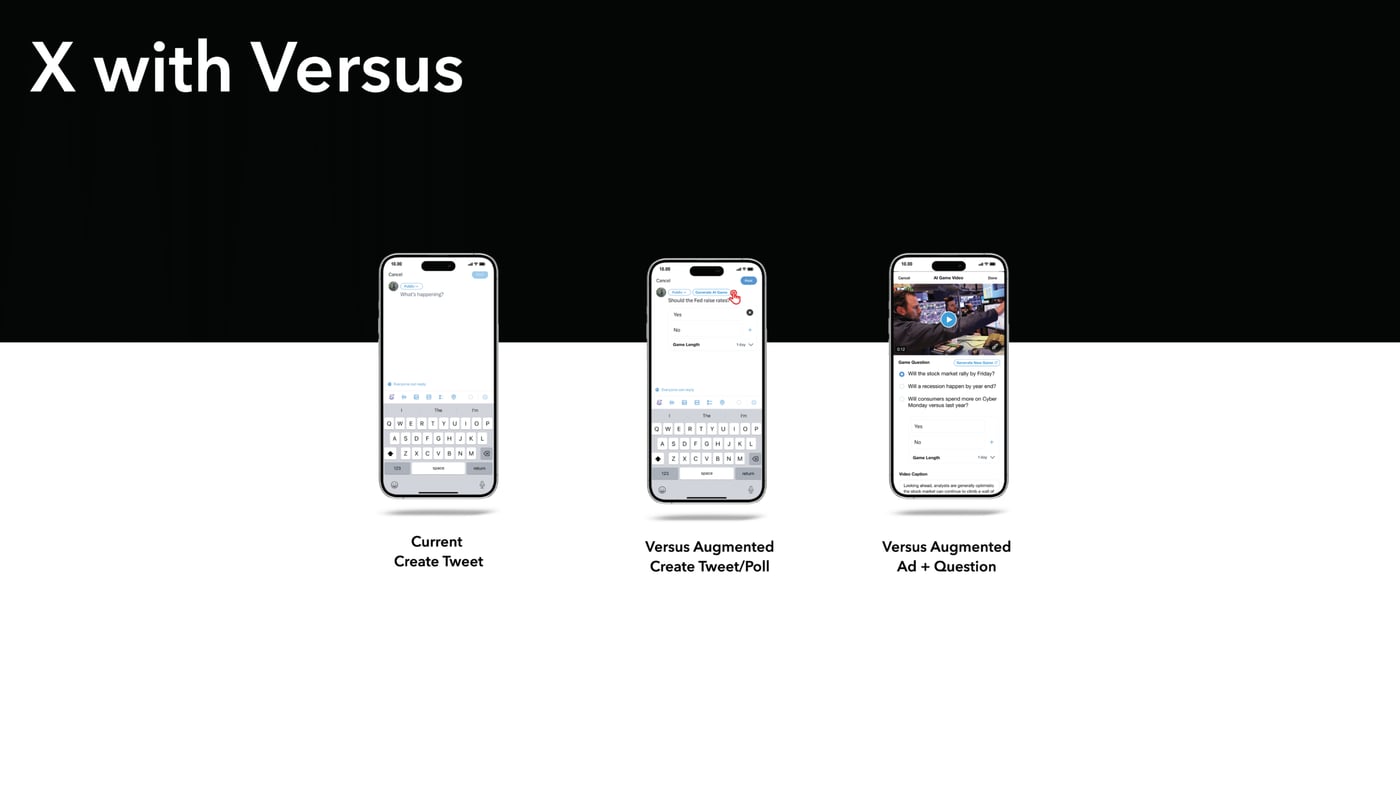
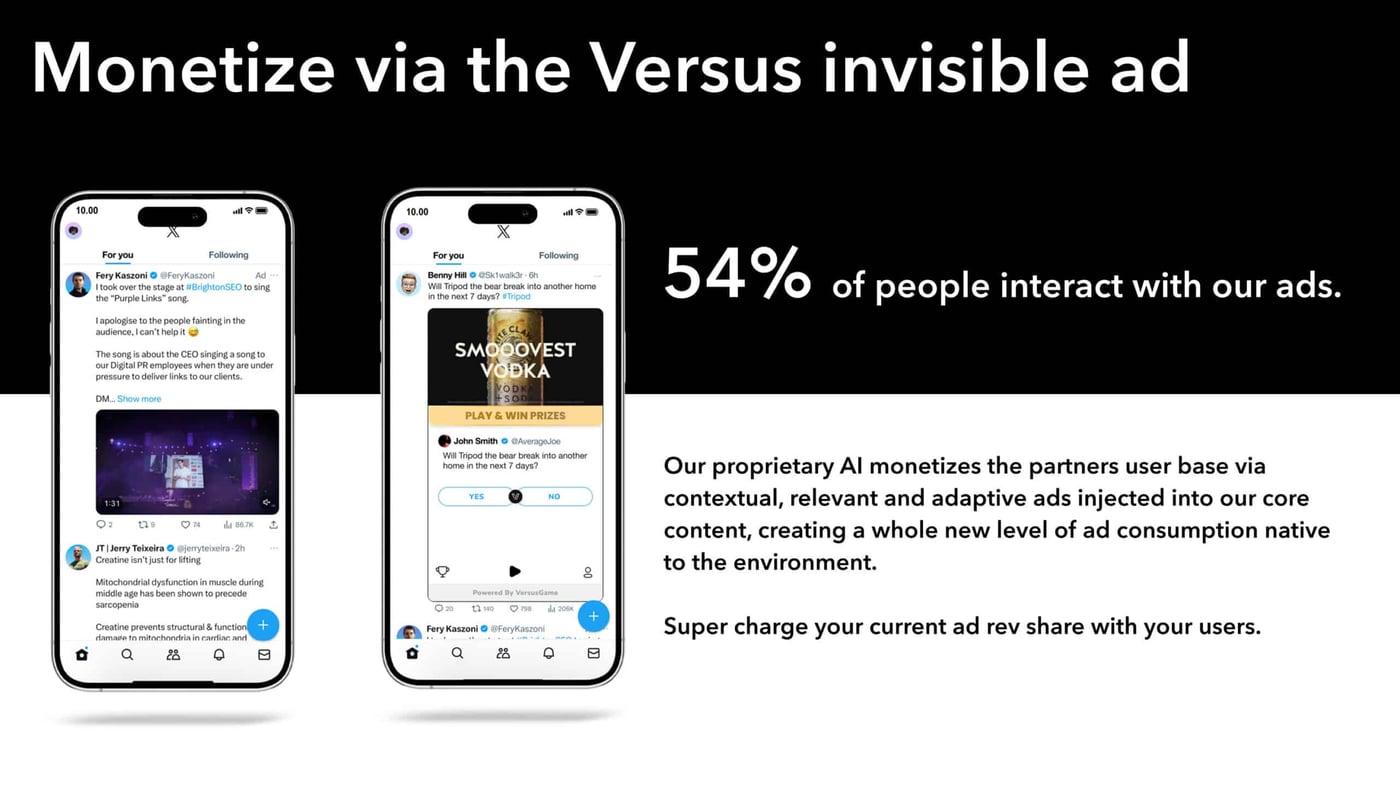
A competitive, pick-a-side matchup at the center of the format, designed to be understood and acted on in a single glance.
An entry unit engineered to sit naturally inside social feeds, converting a scroll into a tap without breaking the reading rhythm.
UI templates built to absorb partner content reshaped by the proprietary AI into the Versus format, structure that stays intact as the source changes.
A flexible visual framework that adapts per partner across ecosystems like Twitter and Microsoft while holding a consistent Versus identity.
A structured, state-aware component set that turns the five-screen flow into a reusable, hand-off-ready system rather than a one-off comp.
An entertaining, competitive interaction model designed to lift engagement by making the brand message the game itself.
