Three minimal, creative storyboards that turn AT&T's new processes into legible, trigger-by-trigger stories anyone in the room can follow.
3Process storyboards
Multi-triggerProcess moments mapped
FigmaSingle-tool workflow
Concept → PurchaseFull narrative arc
The Challenge
AT&T needed to roll out several new internal processes, but process documentation rarely lands with the people it depends on. Flowcharts and step lists describe what happens without conveying why a moment matters or where a person's experience actually turns. The brief was pointed: create three minimal yet creative storyboards that make each new process legible, and that surface the different triggers throughout the process so teams could align on the same picture.
The tension sat between restraint and expression. Too sparse and the storyboards would read as generic wireframes; too decorative and they would bury the process logic under styling. The work had to stay disciplined enough to feel enterprise-appropriate for AT&T, yet human enough that a stakeholder could point to a single frame and immediately understand which trigger it represented and what it set in motion.
Approach
Map the process and its trigger pointsBefore drawing anything, I broke each new AT&T process into its moments of change, the triggers that move a person from one step to the next. Isolating those beats first meant every frame later earned its place by illustrating a real decision point, not filler.
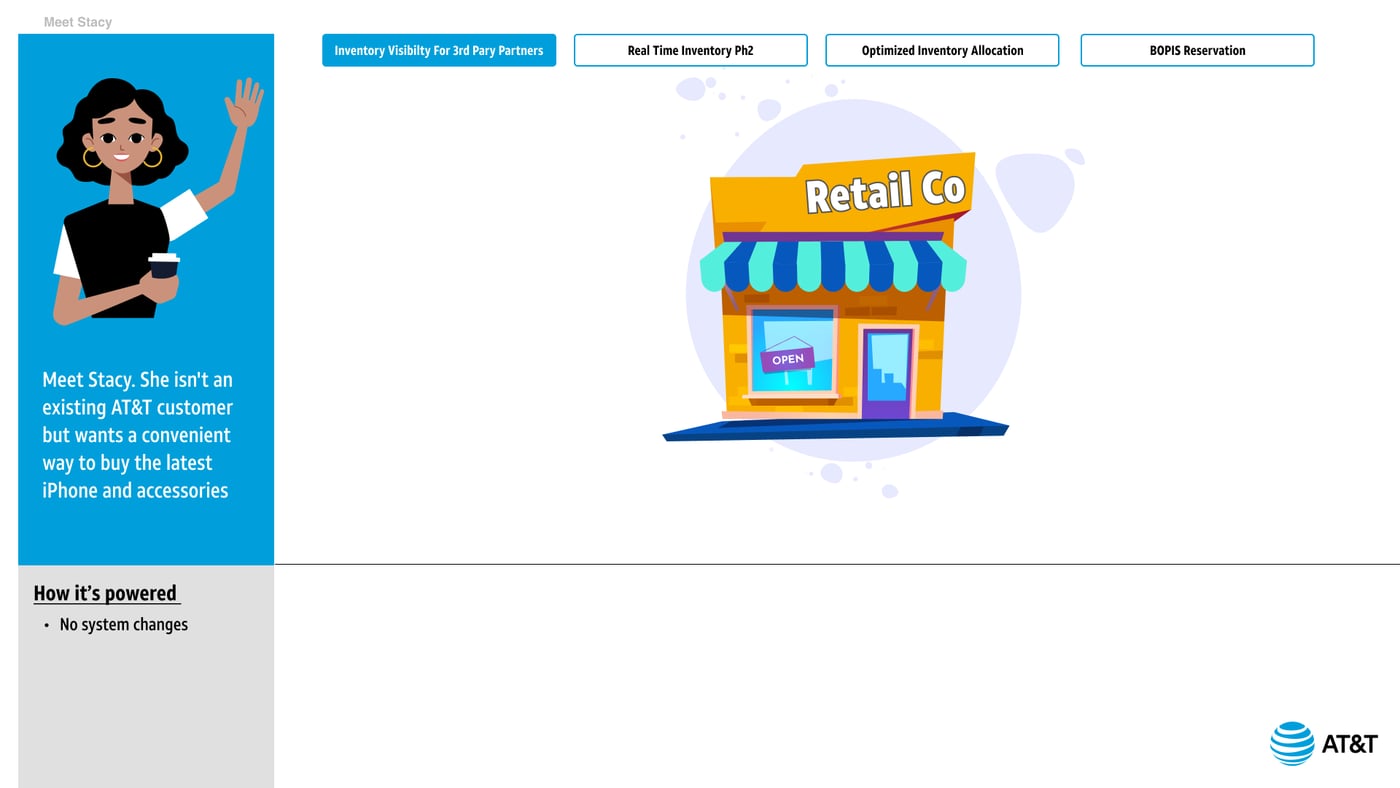
Anchor the abstract to a characterProcess docs stay theoretical until someone can see themselves in them. I introduced Stacy as the through-line, so stakeholders followed a person moving through the process rather than reading a flowchart. Meet Stacy became the opening frame that grounds the whole arc.
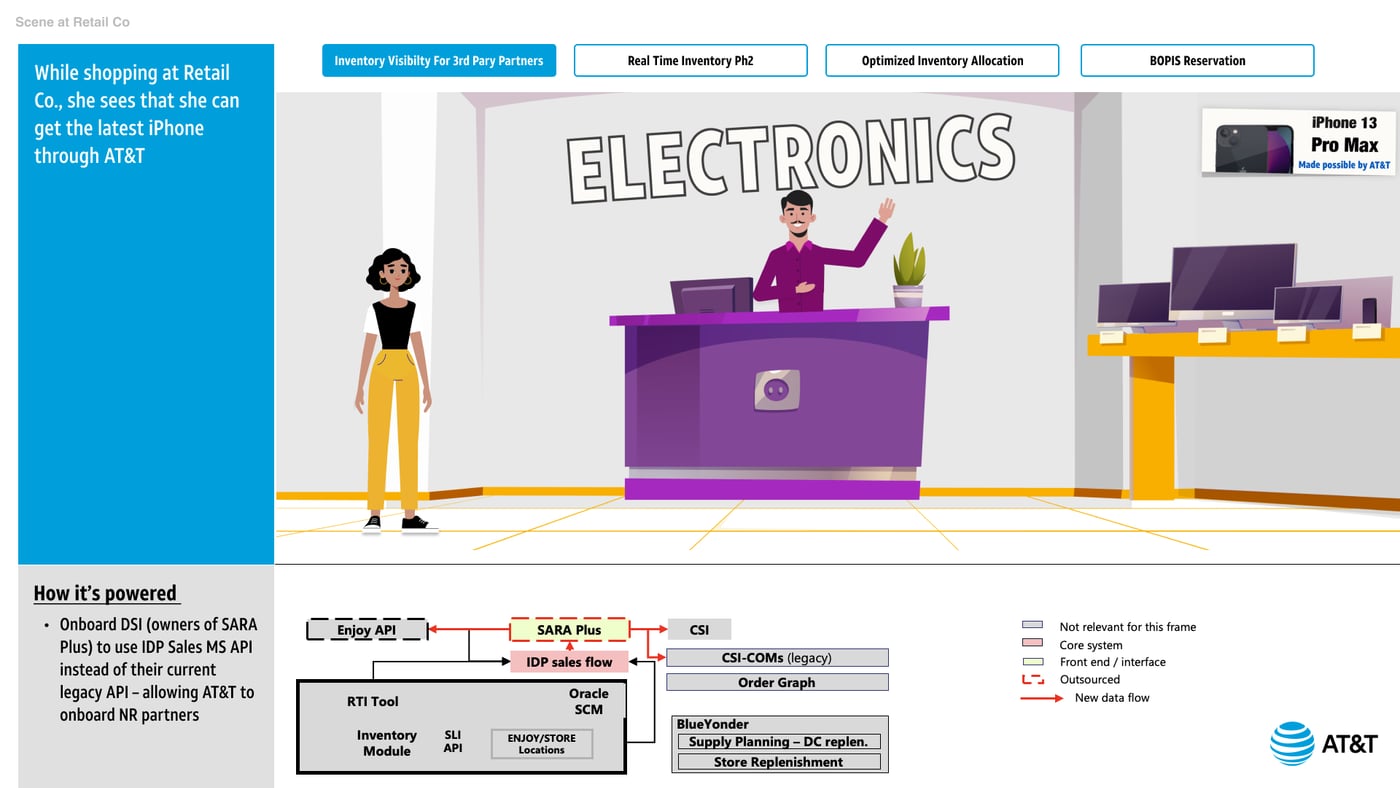
Storyboard the retail sceneThe Scene at Retail Co frames set the process in its real environment, the store floor where the interaction actually happens. Establishing that setting gave every downstream trigger a believable stage and kept the narrative concrete instead of diagrammatic.
Build a minimal, brand-aligned visual languageThe brief asked for minimal yet creative, so I designed a restrained frame system in Figma, consistent composition, limited palette, and clear focal hierarchy, that reads instantly and stays unmistakably on-brand across all three storyboards.
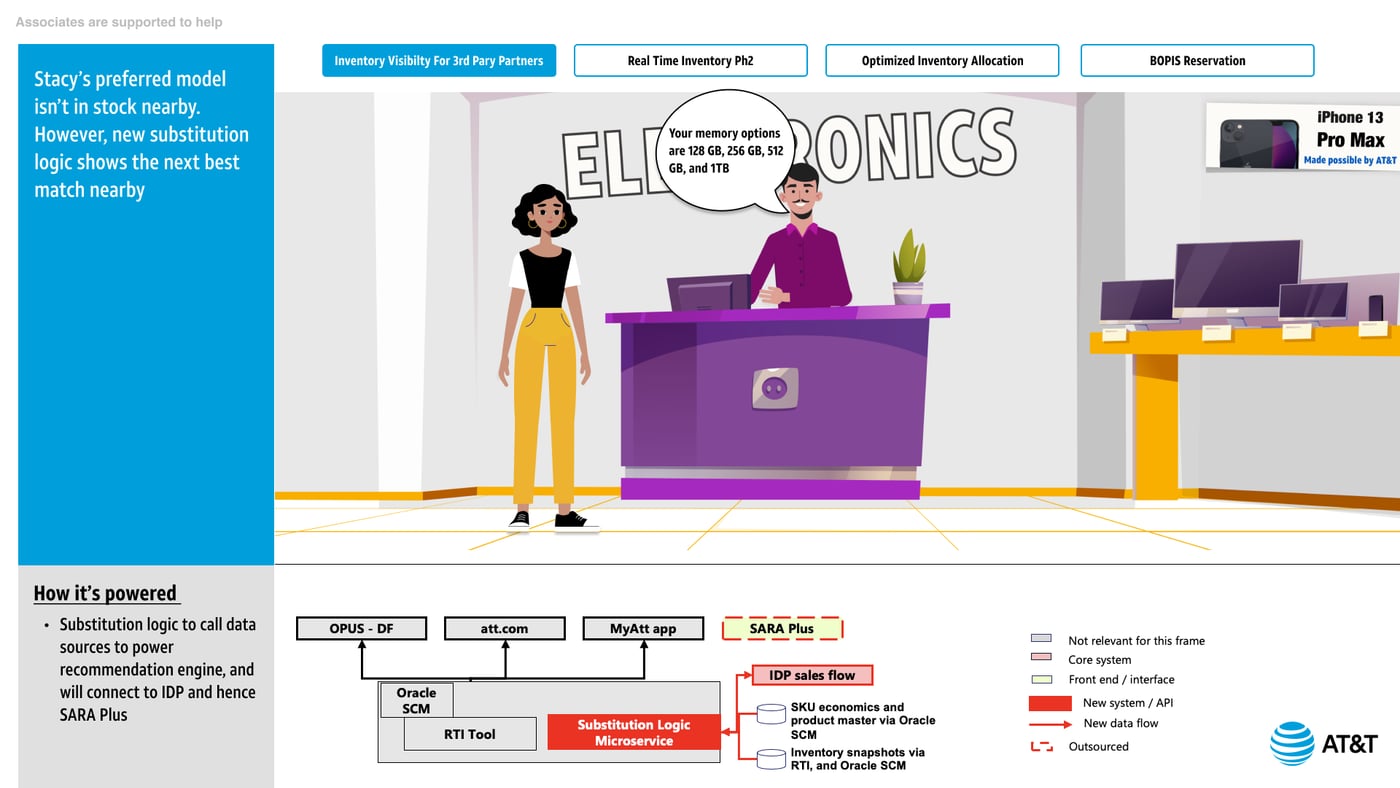
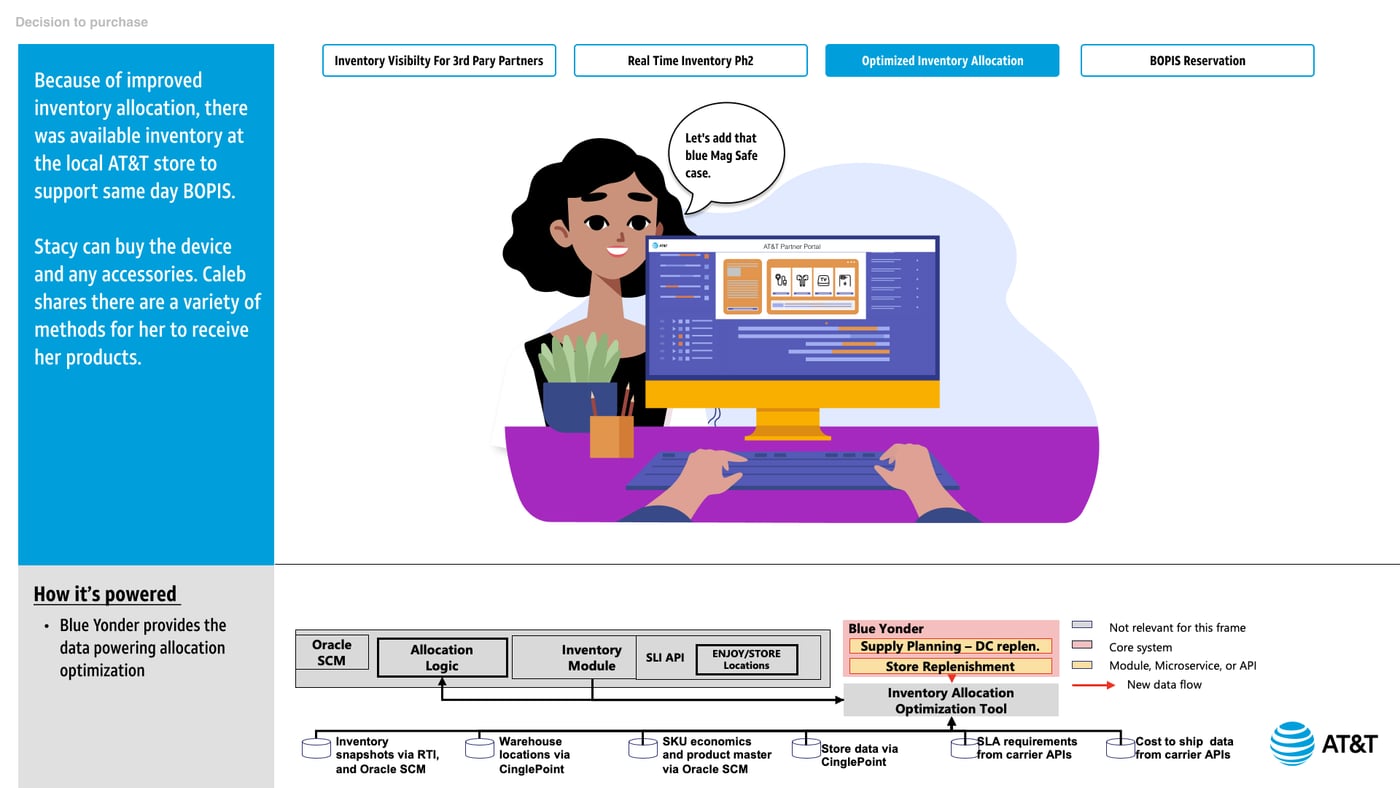
Sequence toward a clear resolutionEach storyboard was sequenced to build to a payoff: Associates Supported, then Decision to Purchase. Landing every arc on a legible outcome let any reviewer trace cause and effect from the first trigger to the final decision in one pass.
Key Features
Trigger-by-trigger framing
Every process trigger is rendered as its own discrete frame, so the moments that move a person forward are impossible to miss and easy to reference in review.
Character-led narrative
Stacy carries the story from the opening Meet Stacy frame onward, turning an abstract process into a person's journey stakeholders can actually follow.
Minimal visual system
A restrained palette, consistent composition, and clear focal hierarchy keep the storyboards clean, fast to read, and unmistakably on-brand for AT&T.
Grounded retail staging
The Scene at Retail Co frames place each process on the real store floor, giving every trigger a believable setting instead of a floating diagram.
Associate support moments
The Associates Supported frames make the enablement beats explicit, showing where and how staff are backed up as the process plays out.
Decision-focused resolution
Each arc lands on a Decision to Purchase payoff, closing the loop so reviewers can trace the full line from first trigger to final outcome.
A storyboard earns its keep the moment a stakeholder can point to the exact frame where the decision happens. Clarity is the creativity, the minimalism is what lets each trigger read.
Chris Cooper, design rationale
Results
Three complete process storyboards delivered in Figma, each mapping a new AT&T process end to end.
Every trigger throughout the process rendered as its own readable frame, giving teams a shared, point-to-able reference.
A reusable minimal visual language, palette, composition, and hierarchy, that stakeholders could extend to future process storyboards.
A character-led arc from Meet Stacy through Scene at Retail Co to Decision to Purchase that aligns cross-functional reviewers on one narrative.